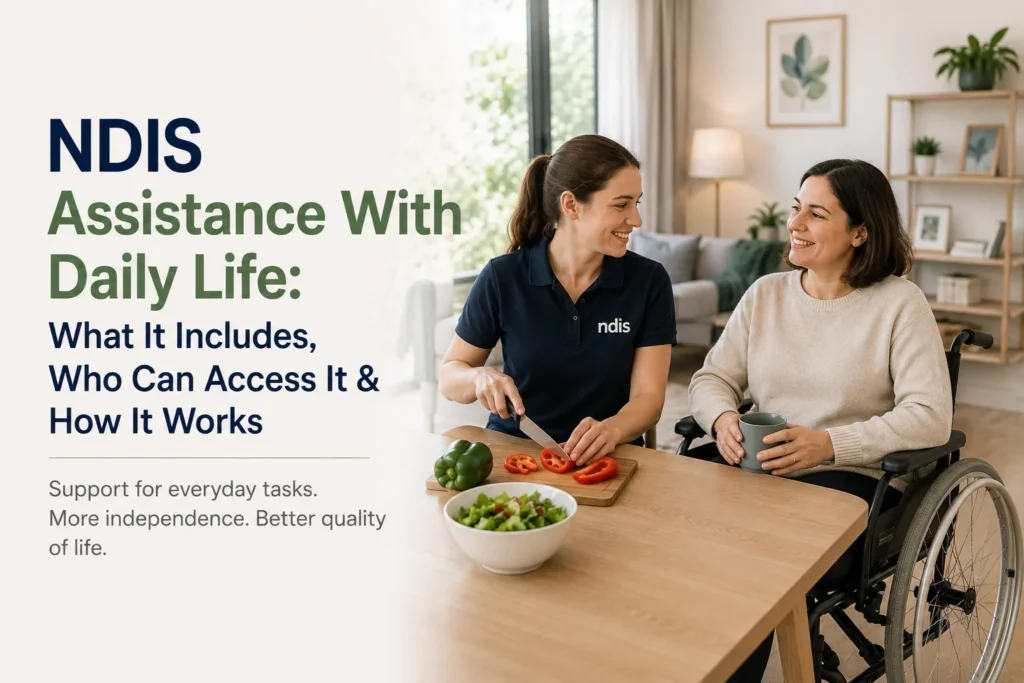
NDIS assistance with daily life, often called NDIS daily living support, helps eligible participants manage everyday activities and routines. It can include help with morning and evening routines, personal activities, meal preparation, domestic assistance and getting out in the community.
What you receive depends on your NDIS plan and personal circumstances.
If you’re new to the NDIS, terms like “assistance with daily life” can sound broad and a little vague. That’s fair. It covers a wide range of everyday support, and the right mix looks different for every participant.
This guide breaks down what’s included, who it’s for, and how the support actually works day to day.
What Is NDIS Assistance With Daily Life?
NDIS assistance with daily life is a category of support funded under a participant’s NDIS plan. It helps people complete everyday tasks they might otherwise find difficult due to disability.
The NDIS (National Disability Insurance Scheme) is the Australian Government scheme that funds support for eligible people with permanent and significant disability. An NDIS participant is someone approved to receive funding under the scheme. Their NDIS plan sets out the support they’re funded for, based on their goals and needs.
Assistance with daily life sits within this plan. It’s designed to help with the practical, everyday side of life. Think personal care, meals, household routines, and getting around.
Plans, providers and websites often use both “assistance with daily life” and “assistance with daily living” to describe this support. It is a flexible category, and a support worker delivers it in a way that suits the individual.
What Does NDIS Assistance With Daily Life Include?
This support can cover a wide range of everyday tasks. What’s actually funded depends on the participant’s plan and assessed needs.
Here’s a general overview of what falls under this category.
Personal Care and Daily Personal Activities
Daily personal activities are the hands-on tasks involved in looking after yourself. A support worker may assist with:
- Showering and bathing
- Dressing and grooming
- Toileting and continence care
- Eating and drinking
- Medication routines, where this is part of your plan
This support is usually delivered one-on-one, often in your own home. You choose how things are done, and the support worker follows your lead on comfort and privacy.
Showering and dressing are personal activities. Laundry and cleaning are household tasks. Your plan may fund them as separate supports, so it helps to know which is which. If personal care is your main need, see our NDIS personal activities support.
Meal Preparation and Food-Related Support
A support worker can help plan meals, shop for groceries, and prepare food. This might mean cooking a full meal together or simply helping with meal planning for the week.
For participants working on independence, this support often shifts over time. It moves from doing tasks for someone towards doing tasks with someone.
NDIS Domestic Assistance and Household Tasks
NDIS domestic assistance covers the regular tasks that keep a home safe and comfortable. A support worker may help with:
- General household cleaning
- Laundry and washing clothes
- Meal preparation
- Keeping frequently used living areas tidy and easy to move around
- Other eligible household activities
Funding for household tasks is linked to your disability-related needs. Your support coordinator or plan manager can confirm what applies to your plan.
If household support is your main area of need, see our NDIS household task support.
Assistance With Daily Routines
Some participants need support to structure their day. This might include reminders, help with time management, or support to build a consistent routine.
Routines matter. They create predictability, and predictability often reduces stress.
Mobility and Getting Around
Support with mobility can include help moving safely around the home, transferring between positions, or using mobility aids. For support getting to appointments or the shops, assist travel and transport is usually the more relevant funded support.
Support With Community Access
Daily-life assistance can also extend into the community. A support worker might help a participant attend appointments, run errands, or take part in local activities.
Where community involvement is a bigger focus, it is often addressed through NDIS community participation support instead.
Examples of NDIS Daily Routine Support
NDIS daily routine support looks different for every participant. A support worker may help with:
- Morning routines: getting up, showering, dressing and having breakfast
- Meals: planning, preparing and eating at regular times
- Household responsibilities: organising chores across the week
- Evening routines: dinner, getting ready for bed and preparing for the next day
- Everyday activities: completing tasks with the right level of help
Here is an illustrative example (not a real participant). Someone who finds mornings stressful might agree on a set order with their support worker: shower, dress, breakfast, then check the day’s plan. Over time, the support worker may step back as the routine becomes familiar.
If you want to build skills for everyday tasks, our NDIS life skills development support may suit you.
Who Can Receive NDIS Assistance With Daily Life?
Access depends on three things: your NDIS eligibility, your individual needs and the supports in your NDIS plan. It is generally relevant to participants who need help completing everyday activities safely and independently.
If you are already a participant, your plan shows which support categories are funded. If you are not yet a participant, the NDIA decides eligibility.
Every plan is different, so what is funded for one person can differ from another.
This article provides general information only. It doesn’t determine individual eligibility. For guidance on funding eligibility more broadly, see Who Is Eligible for NDIS Funding in Australia?
How Does NDIS Assistance With Daily Life Work?
In practice, this support follows a fairly consistent process, even though the details differ for each participant.
- Identify daily support needs. Consider which everyday tasks are difficult or unsafe to manage alone.
- Understand the participant’s NDIS plan. Check what supports are funded and how the budget can be used.
- Identify suitable supports. Match the funded categories to real, practical daily needs.
- Choose an appropriate provider. Look for a provider experienced in daily-life support.
- Develop an individualised approach. Agree on how and when support will be delivered.
- Review whether the support is meeting the participant’s needs. Adjust the approach as circumstances or goals change.
This isn’t a one-off setup. Good daily-life support gets reviewed and adjusted as life changes.
Can NDIS Daily-Life Support Be Provided at Home?
Yes, NDIS daily-life support can be provided in a participant’s own home. In-home support is one of the most common ways this assistance is delivered.
A support worker might visit to help with personal care in the morning, assist with an evening meal, or support household tasks during the week. The exact setup depends on what’s funded and what suits the participant’s routine.
Not every activity will automatically be covered. Funding still depends on the individual’s plan.
How Can Daily-Life Support Promote Independence?
Well-matched daily-life support can help build confidence, routine and practical life skills over time. Good support matches the amount of help to what you need on the day.
Common daily living challenges include:
- Finding the energy to complete a full morning routine
- Planning and cooking regular meals
- Keeping up with laundry and cleaning
- Remembering appointments and daily tasks
Support can reduce the pressure around these tasks and leave room for the things you enjoy.
For example, a support worker might guide a participant through meal preparation rather than handling it entirely. Over time, this can build:
- Confidence in everyday tasks
- Consistent routines that reduce stress
- Practical life skills
- Community participation and social connection
- Better overall quality of life
Outcomes vary between individuals. Support can help, but it can’t guarantee a specific result.
Daily-Life Assistance vs Personal Activities
Assistance with daily life is the broader category. Personal activities refers more specifically to hands-on personal care, such as showering, dressing, and toileting.
In practice, personal activities usually sit within the broader daily-life category. If personal care is a participant’s main or most significant need, it’s often addressed through the dedicated assist personal activities service instead.
Understanding this distinction helps when reading an NDIS plan or discussing support needs with a provider.
Is NDIS Assistance With Daily Life Funded by the NDIS?
Funding depends on the participant’s individual plan, their assessed needs, and whether the support meets the NDIS “reasonable and necessary” criteria. Not every daily task will automatically attract funding.
The National Disability Insurance Agency (NDIA) assesses reasonable and necessary supports based on how they relate to a participant’s disability and goals. This is a general explanation, not a determination for any individual plan.
If you’re unsure what your plan covers, it’s worth discussing this directly with your support coordinator, plan manager, or provider.
How to Choose an NDIS Daily-Life Support Provider in Perth
Choosing the right provider makes a real difference to day-to-day experience. A few practical things worth considering:
- Experience with daily-life and personal support
- A genuinely participant-centred approach
- Service availability that matches your routine
- Clear, consistent communication
- Support-worker suitability, including compatibility and skill
- Location and travel practicality
- Flexibility as needs change
- A real understanding of the participant’s goals
Achieve Disability Care works with participants across Perth to provide daily-life support built around individual routines and goals.
For a broader look at choosing a provider, see How to Choose the Right Registered NDIS Provider in Perth.
NDIS Assistance With Daily Life in Perth
Perth participants access daily-life support in a range of settings, from inner suburbs to outer metro areas. Local availability and travel time can affect how consistently support is delivered.
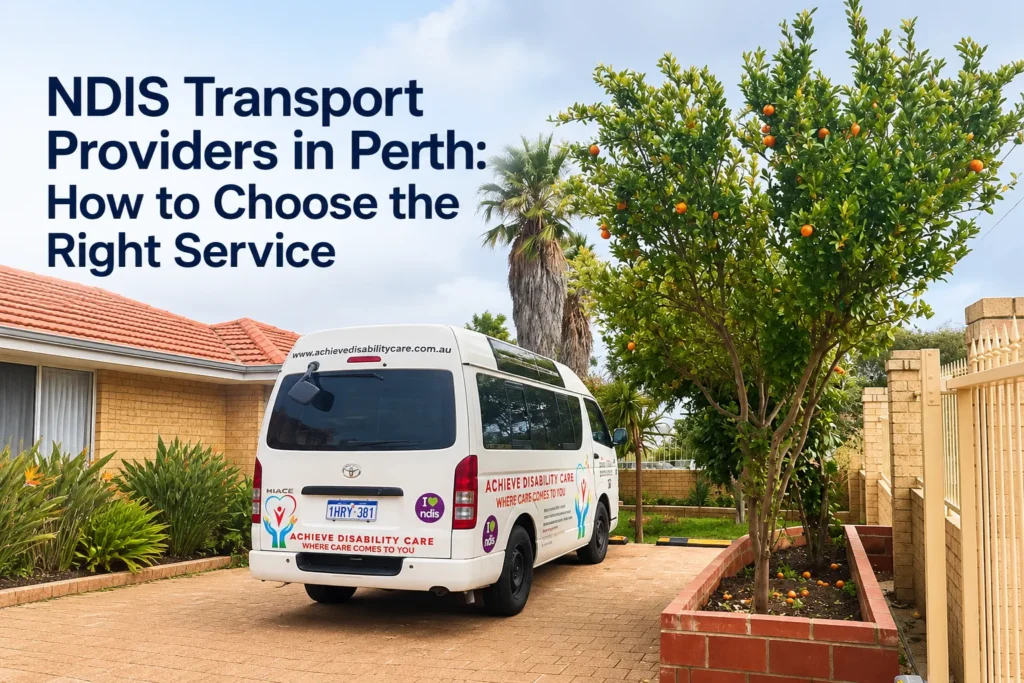
Achieve Disability Care is a registered NDIS provider based in Balga, supporting participants across Perth metro with personal care, household assistance, and everyday support built around each person’s plan and goals.
Conclusion
NDIS assistance with daily life covers a wide, flexible range of everyday support, from personal care through to household tasks and community access. What’s funded, and how it’s delivered, depends entirely on the individual’s plan and goals.
The right NDIS assistance with daily life fits around your routine and your goals. What is funded, and how it is delivered, depends on your plan.
If you’re exploring daily-life support options in Perth, talk to Achieve Disability Care about your needs. We’re happy to talk through what’s possible under your plan, with no pressure either way.
Ready to navigate your NDIS eligibility journey with confidence?
Understanding what you’re eligible for shouldn’t feel overwhelming. Achieve Disability Care can help you make sense of your NDIS plan and match it to the daily-life support that actually fits your routine.
Frequently Asked Questions