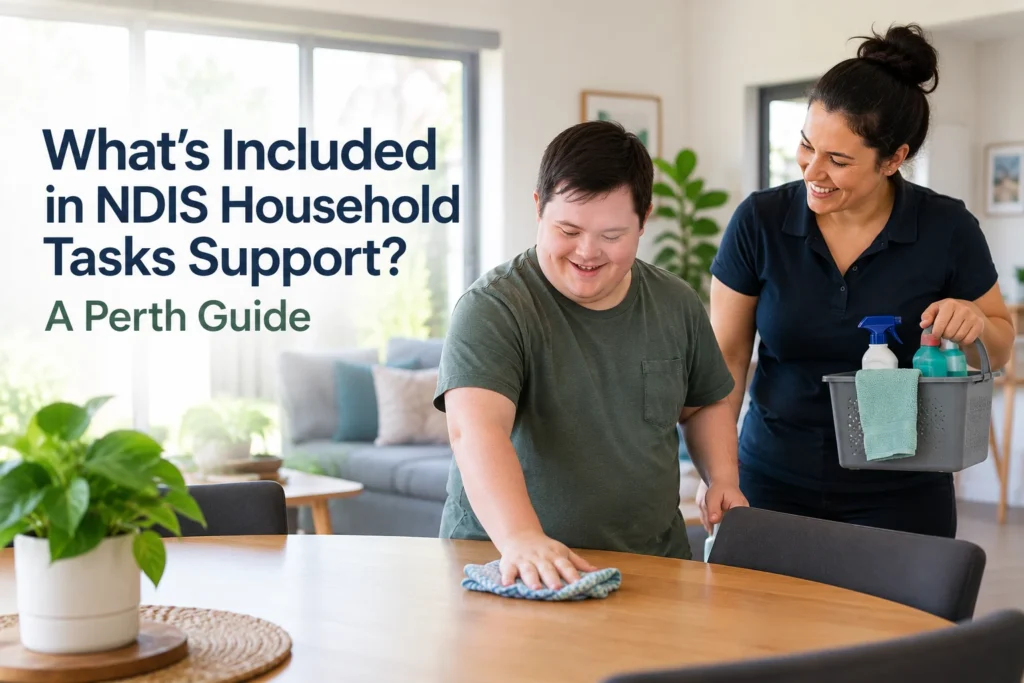
If your NDIS plan includes Core Supports, household tasks are often one of the more flexible categories inside it. But “flexible” doesn’t mean unclear once you know what to look for.
NDIS household tasks funding covers help with the everyday jobs that keep a home running: things like cleaning, laundry, changing bed linen, and basic yard upkeep. It sits inside your Core Supports budget, specifically under Assistance with Daily Life, and it’s meant to support tasks you’d struggle to do safely or independently on your own. Not every household job qualifies, and knowing where the line sits saves you from awkward conversations at plan review time.
This guide walks through what’s actually included, what usually isn’t, and how it works for NDIS participants living in Perth.
What Are the Basic Age and Residency Requirements?
Before diving into complex clinical assessments, every applicant must meet the scheme’s fundamental baseline rules. The National Disability Insurance Agency (NDIA) enforces strict requirements regarding your age and citizenship status before reviewing any applications.
- General cleaning (vacuuming, mopping, bathroom and kitchen upkeep)
- Laundry and ironing
- Changing and washing bed linen
- Basic tidying and organising of living spaces
- Simple meal preparation, where it’s linked to daily living rather than a separate nutrition need
- Minor yard maintenance, such as mowing a small lawn or clearing debris that creates a safety hazard
A support worker doing these tasks with you, or for you when needed, is one of the more common ways this funding gets used day to day.
Here’s the part worth remembering if you take nothing else from this section: NDIS household tasks funding covers support that helps you maintain a safe, functional home, not general home improvement or one-off deep cleaning projects.
That distinction matters more than most people expect.
What Usually Isn’t Covered
Renovations, major structural repairs, professional pest control, and landscaping beyond basic upkeep usually fall outside this category. It also doesn’t cover cleaning or garden work for other household members’ spaces if those areas aren’t linked to your own support needs. A support worker helping you tidy your bedroom and bathroom is reasonable. The same worker mowing an entire acre block or repainting a fence usually isn’t, unless there’s a documented safety reason tied to your plan.
If you’re unsure whether something qualifies, the honest answer is: check with your plan manager or support coordinator before assuming. Guessing wrong here either means an unfunded expense later or funding used up faster than planned.
Personal Activities vs Household Tasks: Why the Distinction Matters
These two categories get confused constantly, and the confusion is understandable since both sit under Core Supports.
Personal activities cover things done to and for your body: showering, dressing, grooming, and personal hygiene. Household tasks cover things done in and around your living space: cleaning, laundry, basic outdoor upkeep. A support worker might help with both in a single visit, but they’re funded and reported differently, and mixing them up in your plan can cause confusion at review time.
If your support coordinator has ever asked you to separate out “what happened in the shower” from “what happened in the kitchen” on a service log, this is why.
Who Can Access Household Tasks Funding
Access comes down to your plan, not a blanket eligibility rule. If your planner has identified household tasks, such as cleaning, laundry, or basic yard upkeep, as a reasonable and necessary support for your specific circumstances, and your plan includes Core Supports funding, you can use that funding accordingly.
A few things influence whether it’s included:
- Whether a disability makes certain household tasks unsafe or genuinely difficult to complete alone
- Whether you live independently, with family, or in a shared arrangement like Supported Independent Living
- What your current informal supports (family, housemates) can realistically manage
That last point catches people off guard. If a planner believes family members can reasonably cover household tasks, funding for that category may be reduced or excluded. This isn’t a judgment on your situation. It reflects how the “reasonable and necessary” test gets applied in practice.
How Household Tasks Fit Inside Supported Independent Living
For participants in Supported Independent Living arrangements, household tasks are often bundled into the broader support already funded through SIL, rather than sitting as a separate line item. This is worth understanding early, because it changes how the funding gets tracked and reported.
If you’re weighing up SIL as an option and want to understand how household tasks sit inside that model, our guide to Supported Independent Living in Perth covers how the two connect.
What This Looks Like Day to Day in Perth
Perth’s climate and housing stock bring a few local wrinkles worth mentioning.
Summer heat means yard upkeep tends to be more frequent and more physically demanding for several months of the year, which is part of why basic lawn and garden maintenance is a common inclusion for participants with mobility-related disabilities. Older Perth homes, particularly in established suburbs, sometimes have layouts (narrow bathrooms, step-heavy access) that make certain cleaning tasks harder to do safely without support.
Take an illustrative example: a participant living independently in a unit in Perth’s northern suburbs might have a support worker attend twice a week for general cleaning and laundry, with a separate fortnightly visit for basic yard tidying during the warmer months. This is a composite scenario built from common patterns, not a specific client case, but it reflects how the support is actually structured for a lot of participants living independently in the area.
Getting Household Tasks Added to Your Plan
If household tasks support isn’t currently in your plan, or your current allocation doesn’t match what you actually need, a few practical steps help:
- Document specific tasks you’re struggling with and why, including any safety concerns
- Talk to your support coordinator or plan manager about whether the request fits “reasonable and necessary” criteria
- Raise it at your next plan review, with examples ready rather than a general request
Vague requests (“I need more help around the house”) tend to get vague responses. Specific ones (“I can’t safely reach overhead cupboards for cleaning, and my bathroom has a step I struggle with”) give planners something concrete to work with.
If you’d rather talk it through than draft it alone, our team can go over your current plan with you and help identify where household tasks support fits. Get in touch with Achieve Disability Care.
Working with a Local Support Team
Household tasks support works best when it’s delivered by people who understand both the practical side of the work and the person they’re supporting. At Achieve Disability Care, our support workers are based locally in Perth and trained to deliver this kind of daily living assistance in a way that respects your routines, your home, and your preferences for how things get done.
If you’re trying to work out whether household tasks funding applies to your situation, or you want support that actually fits how you live, our team can walk through your plan with you and explain the options clearly.
Learn more about our NDIS household tasks support in Perth, or get in touch to talk through what’s realistic for your circumstances.
Not Sure If Household Tasks Are Covered in Your Plan?
Every NDIS plan is different, and working out exactly what your Core Supports budget stretches to can take some guesswork out of the equation. Our team can walk through your current plan with you, explain what household tasks support could look like day to day, and help you raise the right request at your next review.
Frequently Asked Questions